BY TYLER MAINES
It was in the wee morning hours of October 11th 2019 that the peak of the Heart attack struck Matthew Maines. Clutching at his chest and groaning in pain, his wife looked on in horror as her husband suffered, thoughts racing. He mumbled something about driving himself to the hospital, to which she responded by whisking him away into her own vehicle and hurrying him to the emergency room of Rochester General Hospital. There he would come to face the greatest challenge of his life.
Matthew Maines, my father, is 53 years old and held a senior position at a prominent healthcare and life insurance provider. His career in health insurance culminated in a speech given at the Rochester Memorial Art Gallery on the very same week in autumn. He gave this speech in front of a majority of the senior members of the National Association of Health Underwriters, an organization he prided himself on being a member of. His excitement was palpable as he told his family of the event in the days prior, calling both his sons that lived away from home and even his parents and siblings. As the event pressed closer, Matt noticed something was wrong. His breath came shorter, he was racked by cold sweats and his skin grew a shade paler. He brushed these symptoms to the side, blaming seasonal influenza, and energetically pursued his calling at the event. Matthew’s sister, Lauren Ramich, is a professor of art education at Rochester Institute of Technology, and was teaching a class at the complex that day. In her words, she noticed that he was “pale as a ghost, his skin took on an almost grey color”, he hurried up the stairwell to tell her how well the speech went, but was “wheezing heavily, like he had just run ten miles”. She insisted that he see a doctor but again he blamed the flu. Unfortunately, it was far more serious than a seasonal virus.
Upon arrival to the emergency room, Matthew and his wife were instructed to wait in order to receive a number of tests. Angiograms, blood pressure tests, and a final cardiogram delivered the truth. Matthew Maines was suffering what is commonly referred to as a “Massive Heart Attack”. Clinically referred to as “myocardial infarction”, this occurs when a sudden blockage in the coronary artery causes arrhythmia in the heart. The events following almost seemed a blur to Rhonda Maines, Matthew’s wife and my mother, due to the shock of the announcement. According to the examining doctors, 80-90 percent of his heart’s blood flow was blocked by multiple clots in his arteries. There was no time for stents, no time for him to lower his cholesterol, no time for him to exercise more. He was immediately scheduled for emergency open heart surgery, quintuple bypass, by one of the leading cardiac surgeons at RGH Dr. Ronald Kirshner. His team delivered a hard to swallow verdict, Matt had a 50:50 chance of survival at best, thanks to his younger age. While his wife summoned the various members of the family, he entered the room that would change his life forever, and the surgeons did their work to save his life.
Nearly a week later, after a stint in the cardiac ICU, Matt would finally be taken off of the machines that constantly kept his heart beating, and the doctors watched his newly freed heart beat on its own for the first time. However, something was wrong. He was not coming off of the sedatives as fast as he should have. The nurses and doctors turned to Rhonda and began to question her of his history. Was he an alcoholic? How often did he drink? Was there any unmentioned medicine or drug he was taking? As he eventually regained consciousness and the doctors were able to perform a CT scan, they came to realize that at some point between the surgery and the scan, Matthew had suffered a major stroke. According to Rhonda “I think they were trying to prove he didn’t have a stroke at first, because it was devastating to imagine that it had anything to do with the healthcare process”. Despite the hours of around the clock care, a significant portion of Matts brain was damaged by a clot that had likely formed around his heart and travelled through his bloodstream, where it became lodged in his brain, killing the tissue around it. When asked how she felt about this, Rhonda replied; “I know sometimes people say ‘Why didn’t they catch it?’ when these things happen, but at the end of the day they saved his life. There’s always a risk for things like this”. As Matt began to wake and speak, his words came out slurred and often nonsensical. He would frantically gesture to the nurses, his wife, his kids and repeat the words detail, story, kids, and the phrase “figure it out”. Despite his inability to speak, he tried and tried to reassure his family and others that it would be ok. The RGH neurologist, Dr. Kelly Matmati, and the resident speech therapist made the final diagnosis. Due to damage of the brain, Matt had developed a communication disorder commonly known as aphasia.
According to the National Aphasia Association, aphasia is “an acquired communication disorder that impairs a person’s ability to process language, but does not affect intelligence.”. Though Matthew retained much of his ability to process the world around him, much of his ability to communicate to others was lost. It began to dawn on he and his family that there was a long road to recovery ahead of him. Despite the fact that his body was still suffering the effects of his heart attack and subsequent surgery, it was important that he begin the recovery process as soon as possible. For many, if the symptoms of aphasia last longer than two to three months after a stroke, it is unlikely that they will recover completely. And so Matt began his recovery process by moving on from RGH to the Golisano Restorative Neurology & Rehabilitation Center at Unity Hospital, a few miles away from RGH. There he would spend his next few weeks performing intensive occupational, physical, and speech therapy on a daily basis, with his family visiting as much as they were allowed to provide moral support. His progress was slow at first, relearning simple things like brushing his teeth, tying shoes and holding a pen. Eventually his strength improved and greater physical things such as walking, climbing stairs and lifting light weights became possible. Where Matthew found his hardest time recovering was in his speech. Numbers, dates and names were found to be extremely difficult in Matthews vernacular, as he would spout vastly inaccurate amounts and monikers to his family and therapists as they attempted to push his progress. Despite these snags, his vocabulary began to improve, and he was eventually scheduled to return home, with regular cardio and speech therapies to attend weekly.
It was to my great joy and interest to take my father to one of his first scheduled weekly speech therapies. There I learned a great deal about how Aphasia patients are walked through the therapy process. It is most effective to build the language from the ground up for those who have brain injuries such as Matt. He was assigned an Apple Ipad that had special speech pathology software that contained matching games, mimicry sessions that showed the user how to from certain sounds with their mouth, name-that-image games and more. At every session, he was asked to make the sounds the programs taught him about, building blocks to form words from every successful syllable. His vocabulary was honed so that his most familiar words could be tied to less familiar ones, stringing together his language one step at a time. During this process, it would be clear to any onlooker how desperately he was trying to improve. With every successful word spoken at the behest of Jenn, his speech therapist, he would beam with pride, and every mistake would come the burning determination to get it right. In walking this journey with my father, I came to find pride in his progress as well, and soon it began to bear fruit. Trips to local shopping centers became more regular, and though he would still struggle with numbers and names, using the new communication techniques he had learned, he would be able to communicate basic ideas and desires to the patient employees that listened. Though these moments would prove to be empowering, they were accompanied by hurdles that would test Matthew’s resolve. Incorrect orders at restaurants, disrespectful or uncaring workers, ogling or rude pedestrians in public are something Matthew has to contend with on a daily basis. These hurdles are common for those with speech disabilities, however it is not often that the public acknowledges how disempowering it is for those who have put so much effort into achieving what many do on a daily basis. Though Matthew has a personal medical card that explains his disability to those he may need to ask for help from, it does nothing to shorten the time it takes for his point to get across. Some tips for those who need to communicate with aphasia related speech disabilities from the NAA are as follows: “reduce distractions or background noise, keep communication simple and emphasize key words, don’t talk down to a person with aphasia, praise attempts to communicate and downplay mistakes”.
As with many other individuals who are reliant upon periodic-nonessential medical services such as speech therapy, Matthew was disappointed to find out that the Covid-19 pandemic had resulted in all of his sessions being postponed. In addition to being firmly at risk of serious infection by the virus, much of the progress he had made with his speech was halted. Though he attempted to continue to improve at home, it has been no comparison to the improvements he was making on a weekly basis with his visits to Jenn. At one point during the virus outbreak, Matthew suffered a grand mal seizure due to an imbalance of medication, resulting in a trip to the hospital. Though he was no stranger to hospital visits after his long stint in the fall, this stay would prove to be the most difficult of them all. During the coronavirus outbreak, a number of hospitals in the greater Rochester are were instilling a no-visitor policy in order to prevent the spread of the virus. Upon reaching the hospital in an ambulance, Matthew became confused with what was being said by the doctors and EMT’s who were having difficulties communicating with him. He was placed outside of a room, due to a lack of space, until his family was finally able to convince the hospital to allow one visitor to facilitate his communication. According to Matthew, this trip was particularly scary because “everyone was paranoid” about anyone coming in. Though his visit into the hospital during the outbreak was stressful, some good came of it. Due to the increased awareness of the pandemic, Matthew’s hospital turnaround was accelerated, and he was able to get access to tests much sooner than normal. Within a few days he was released and sent home with a new medicine regimen to prevent any further seizure.
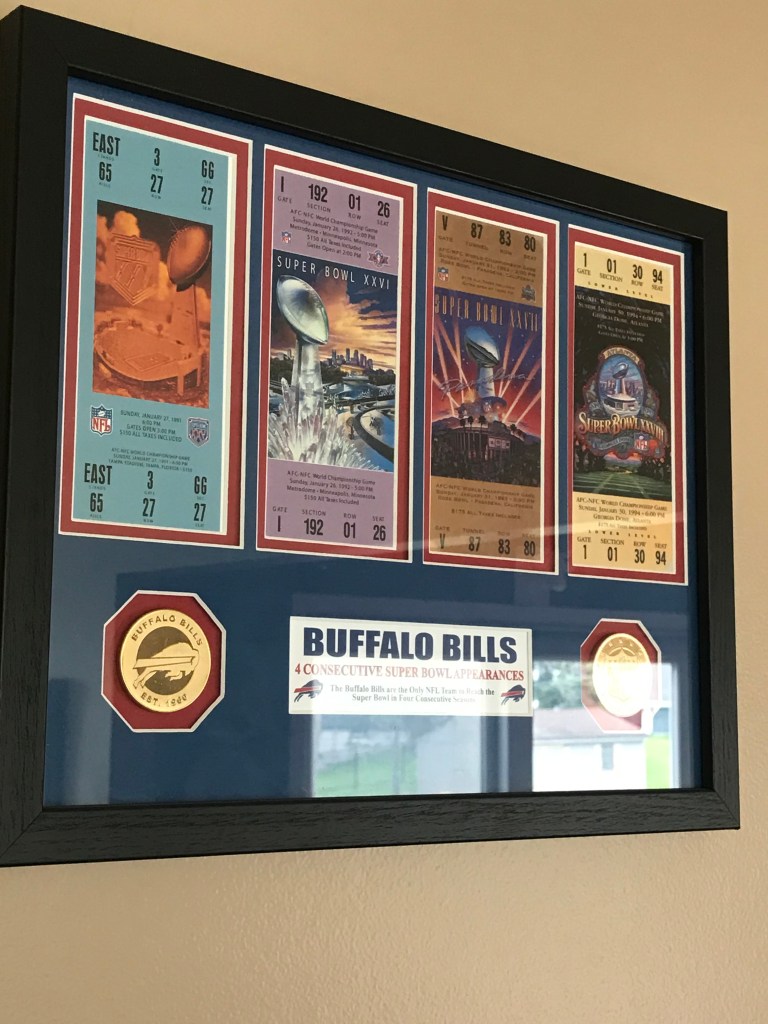
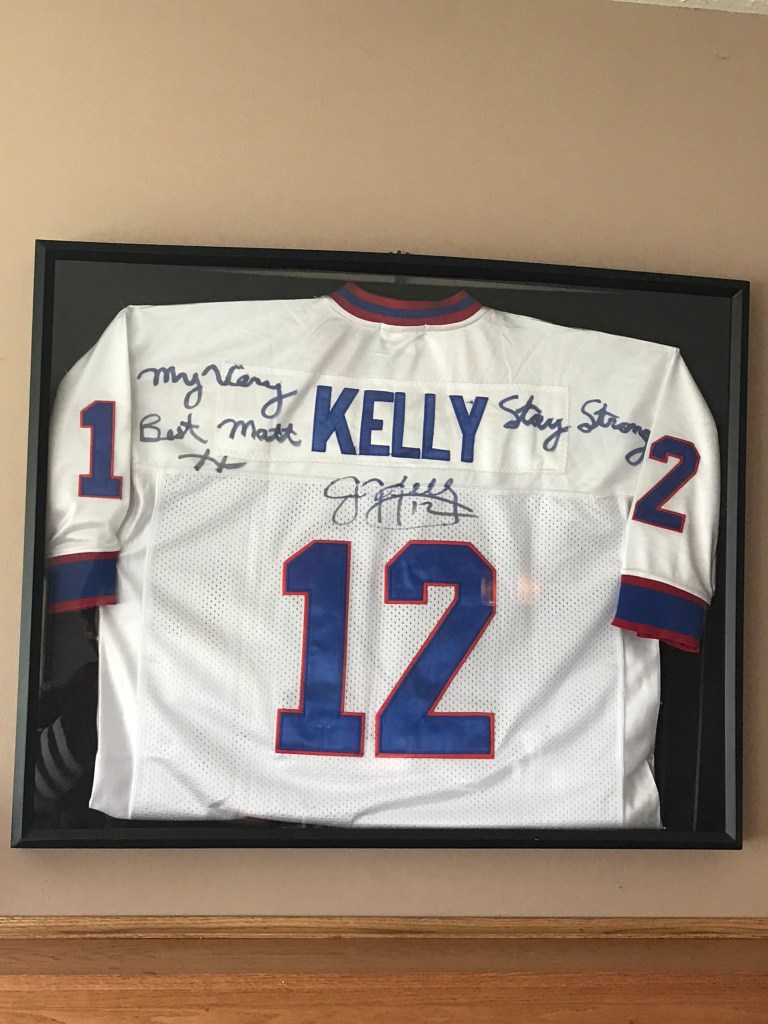
Though recent times have been uncertain, Matt’s determination to continue to improve as soon as his therapy begins has not changed. In this regard he has a few specific goals in mind. Firstly, “to be able to reliably say the names of his own children and immediate family members”. Secondly, “to regain his independence and shop for groceries and other goods on his own, using the confidence he has gained to speak with employees”. Finally, “to be able to travel on vacation, and learn the names of the new places he goes”. After becoming disabled, scores of loved ones, friends and coworkers reached out to acknowledge the man he is. A passionate Bills fan, he watched a majority of the second half of the season from a hospital bed, but he didn’t miss a second of a single game. His most prized possessions have become his Jim Kelly Autographed jersey, and framed Bills Super Bowl tickets gifted to him by his “wolf pack”, a group of friends he has maintained since high school. On a weekly basis they meet on Zoom amid the pandemic to trade stories and jibes over the good times they’ve had in the past, and Matt’s smile and laughs light up whatever room he is in during these sessions. Though speech has become difficult, he still loves to talk. As he continues, day after day, to pursue the voice he once had, the persevering voice of his fighting spirit continues to inspire the friends and family around him.
Sites Referenced in this Article:
http://www.texasheart.org/heart-health/heart-information-center
https://www.health.harvard.edu/a_to_z/heart-attack-myocardial-infarction-a-to-z
 Tyler's ENG 397 Blog